
For many contemporary artists, an artistic career is shaped not only inside the studio but also through exhibitions, residencies, artist camps, collaborations and encounters with different creative communities. These platforms provide opportunities to experiment, exchange ideas and place individual artistic practices within wider cultural conversations. For Odisha-based artist Satyabhama Majhi, exhibitions and residencies have played an important role in expanding the scope of her artistic journey.
Active since the early 2000s, Majhi has developed a multidisciplinary practice involving painting, sculpture, installation, photography, mixed media, public art and community-based projects. Her participation in exhibitions, artist camps, residencies and collaborative initiatives has allowed her to explore different environments while maintaining a consistent interest in people, culture, nature, memory and social change.
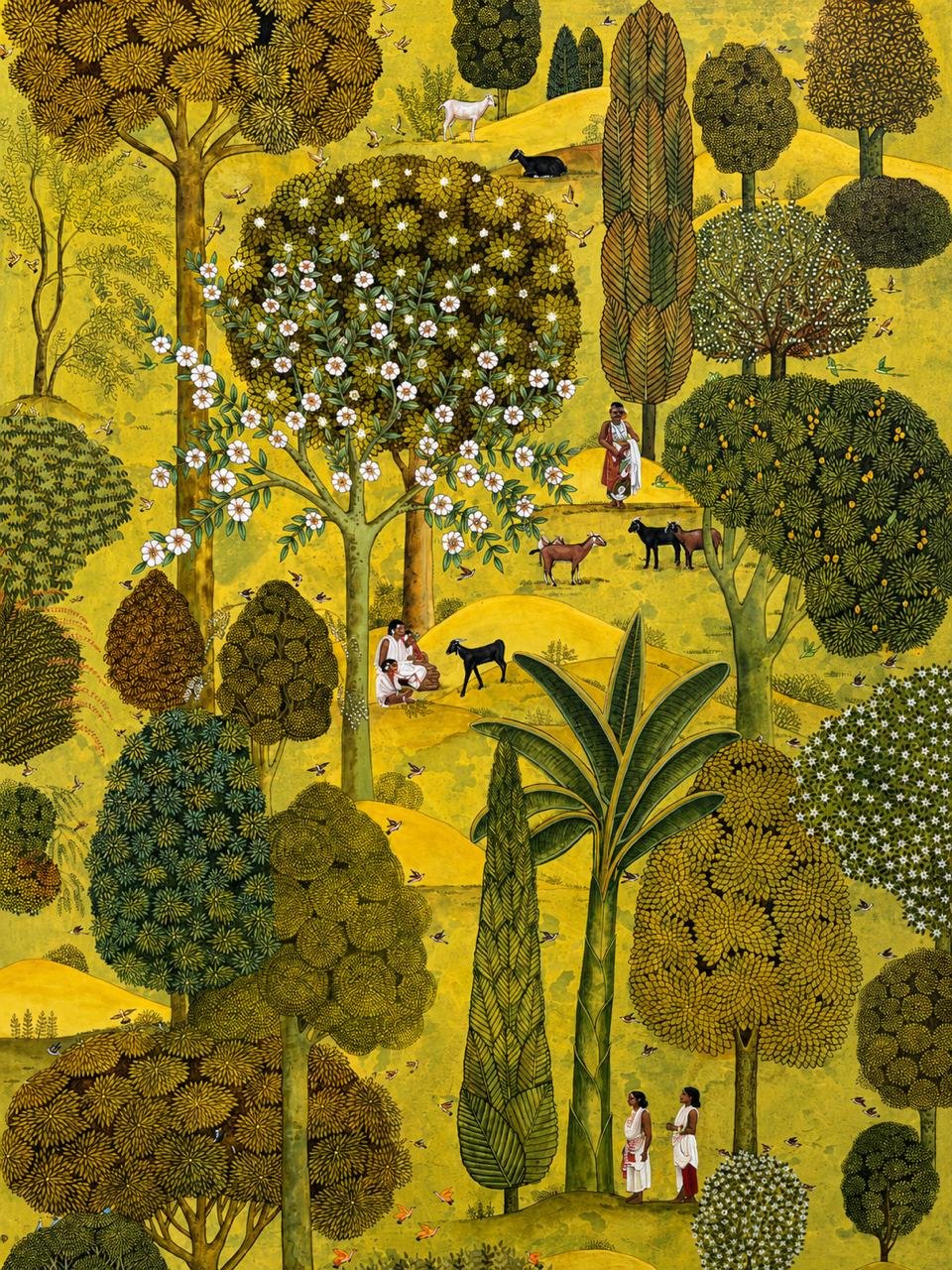
Building a Contemporary Artistic Identity
Satyabhama Majhi’s artistic journey has developed over more than two decades. Based in Bhubaneswar, Odisha, she has remained connected to the cultural environment of the state while also participating in artistic platforms beyond the region.
Her academic background includes an M.F.A. in Traditional Art, but her professional practice has expanded considerably beyond a single artistic discipline. This evolution can be seen through her participation in exhibitions and projects involving different forms of contemporary art.
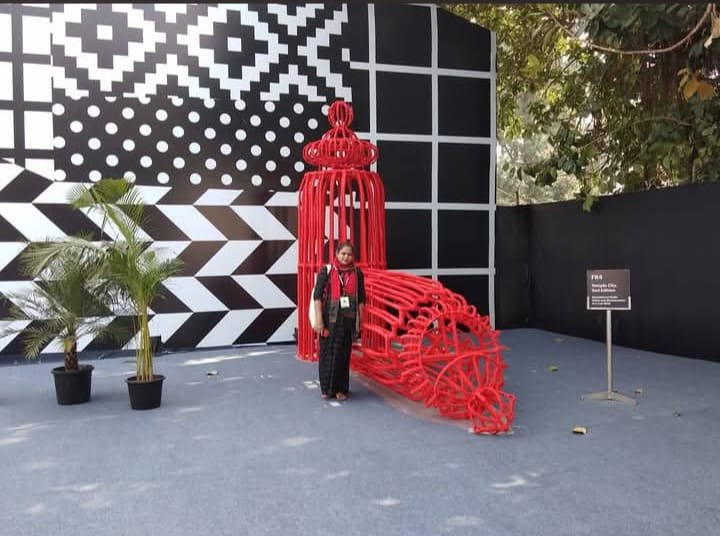
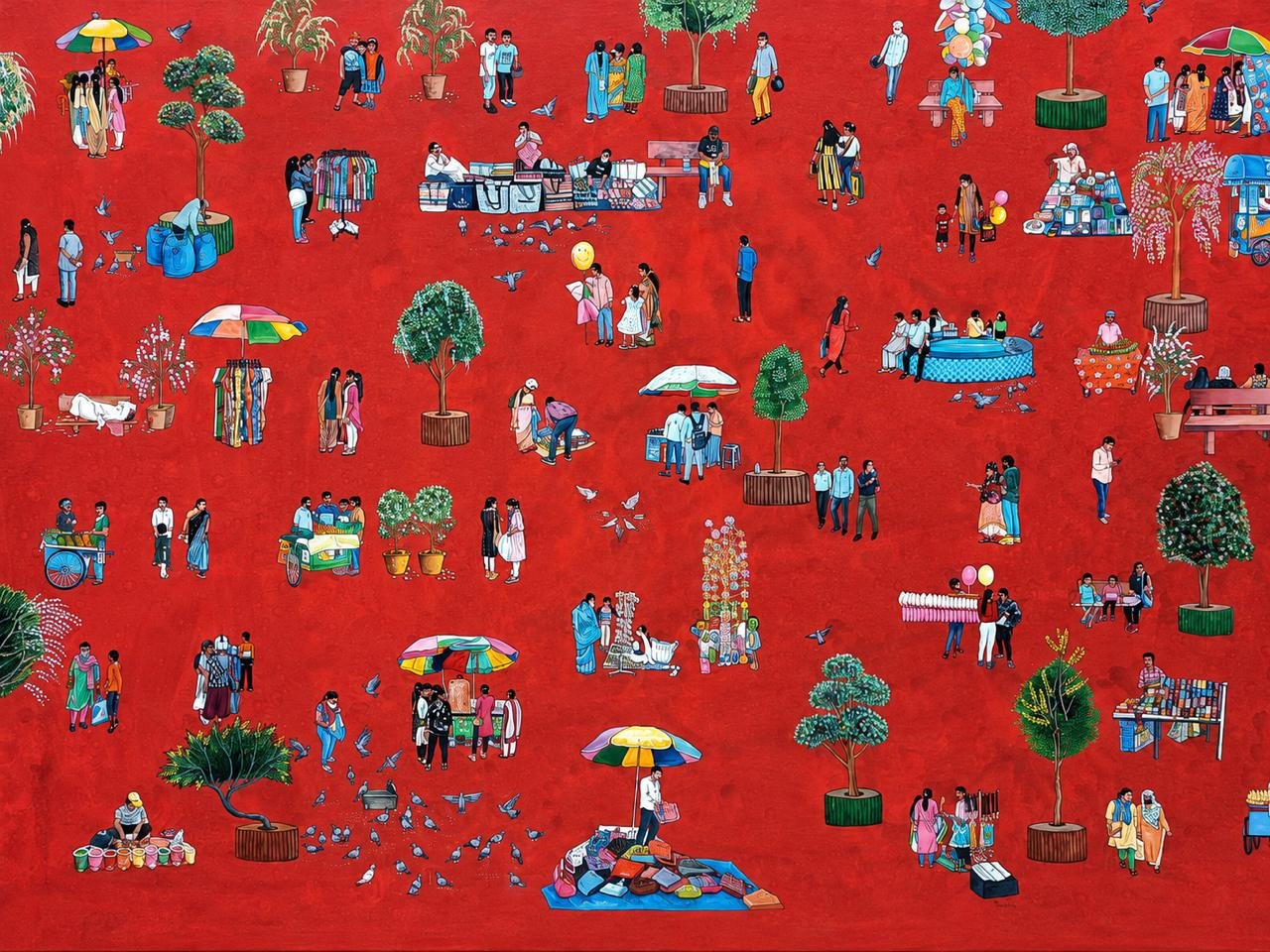
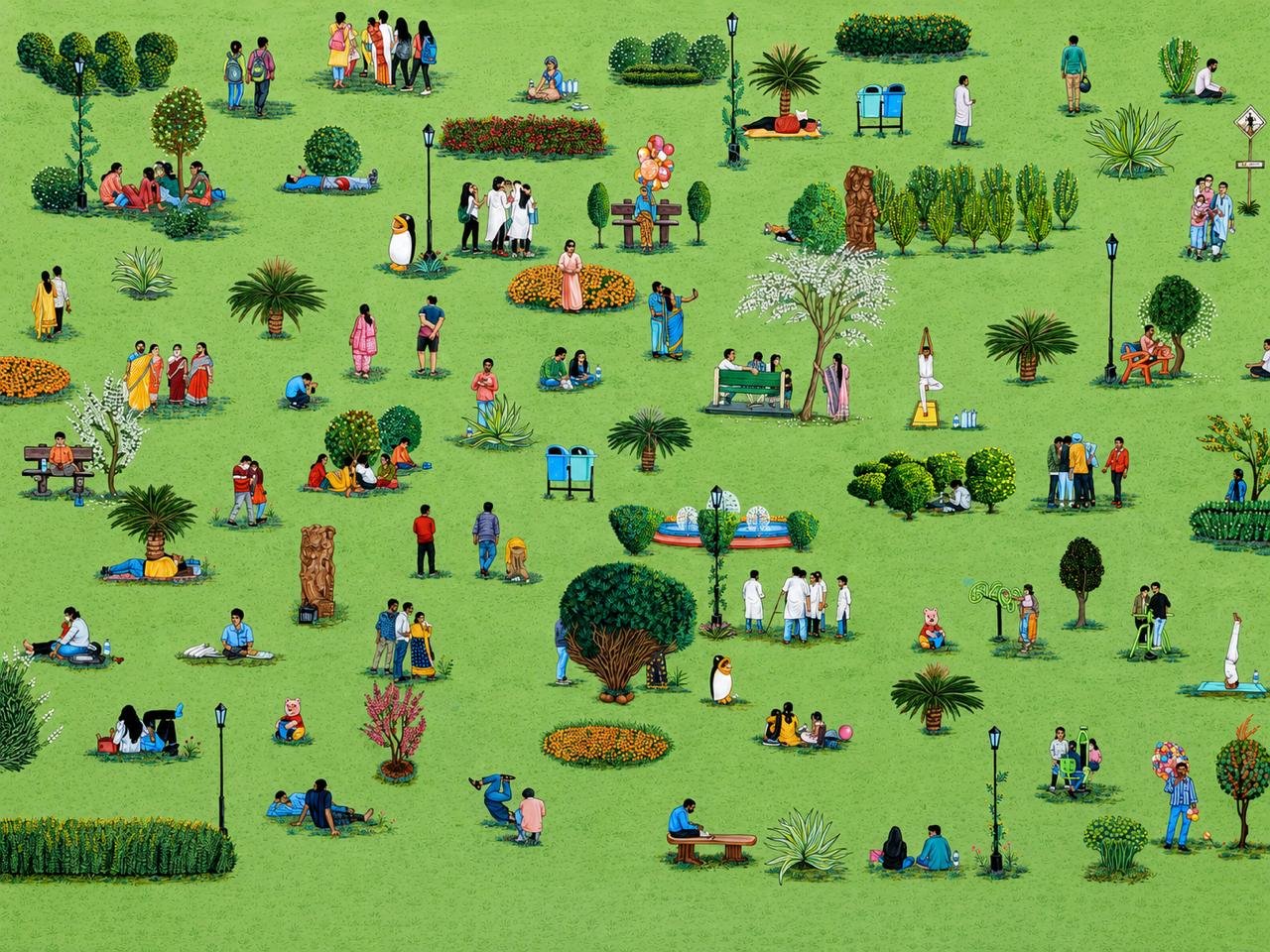
For an artist working across multiple mediums, exhibitions provide more than an opportunity to display finished works. They can become spaces for testing how paintings, installations, photographs, sculptures and mixed-media works communicate with different audiences.
Exhibiting Beyond the Studio
Majhi’s exhibition history includes appearances at established art institutions and gallery platforms in India. Her work has been presented at venues and platforms associated with Bharat Bhavan in Bhopal, Nature Morte in Gurgaon, Lalit Kala Akademi, Odisha Lalit Kala Akademi and gallery platforms in New Delhi.
These experiences have placed her work within different artistic environments.
Each exhibition context can influence how an artwork is understood. A painting displayed in a gallery creates one kind of relationship between artwork and viewer, while a public-art project creates another. Installation work may depend heavily on physical space, whereas photography can document particular environments, people and experiences.
Majhi’s multidisciplinary practice gives her the flexibility to work across these different contexts.
Bharat Bhavan and National Exposure
Among the significant platforms associated with her exhibition journey is Bharat Bhavan in Bhopal, where she presented a solo exhibition.
Bharat Bhavan has long been associated with contemporary and modern Indian artistic practices, making it an important cultural environment for artists. Presenting work in such a setting provides an opportunity to engage with audiences and artistic conversations beyond one’s immediate geographical surroundings.
For Majhi, exhibitions of this kind form part of a broader journey from regional experience toward national visibility.
Her practice, however, has remained strongly connected to the cultural and environmental realities of Odisha. Rather than abandoning regional identity as her work entered broader platforms, she has continued to explore themes rooted in place and experience.
Artist Residencies as Creative Laboratories
Artist residencies can be particularly valuable for contemporary practitioners because they provide time and space for experimentation. Unlike conventional exhibitions, residencies often allow artists to develop ideas while responding to a new location, community or cultural environment.
Majhi has participated in residency programmes and collaborative artistic initiatives, including the Gram International Residency and Gram Art Residency.
Such experiences complement her broader interest in community and place-based art.
A residency can encourage an artist to slow down and observe an unfamiliar environment. Local landscapes, people, traditions and everyday activities may become sources of artistic research. For an artist whose practice is strongly influenced by observation and community engagement, this kind of environment can offer new possibilities.
Collaboration and the Exchange of Ideas
Collaboration is another important dimension of Majhi’s artistic career.
Contemporary art increasingly involves collective projects in which artists, artisans, communities, cultural organisations and institutions contribute to a shared outcome. Such projects can challenge the idea of the artist as an isolated creator.
Majhi’s involvement in collaborative projects reflects this wider understanding of artistic practice.
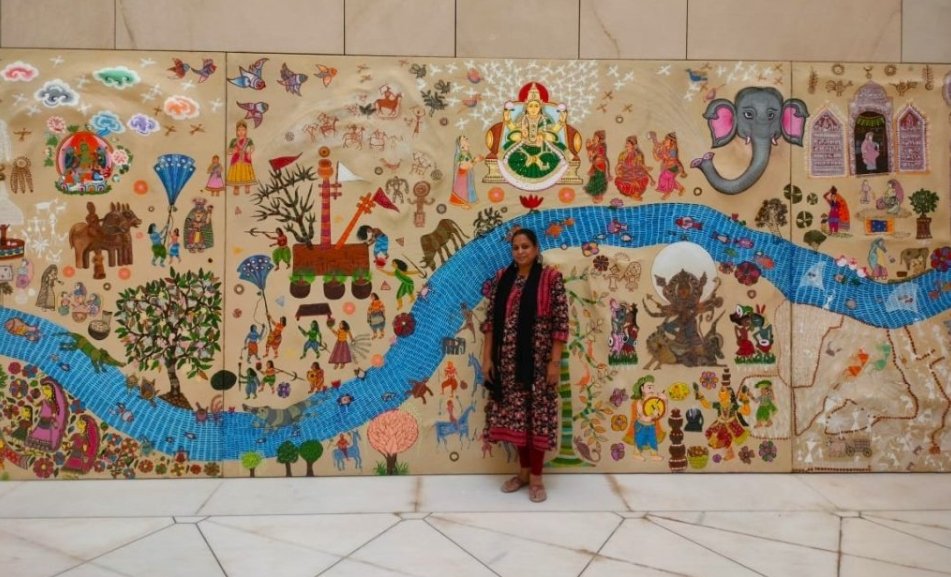
Her work has included interactions with tribal women, rural communities, children, artists and artisans. These encounters have contributed to her interest in cultural knowledge, local traditions and community participation.
Collaboration can also introduce an artist to techniques and perspectives that may not emerge through individual studio work.
The Vancouver Biennale-Linked Experience
Majhi’s artistic journey has also included involvement in projects connected with the Vancouver Biennale, including the I HAVE A DREAM initiative.
Internationally connected projects of this nature provide Indian artists with opportunities to participate in broader conversations around public art, community and social ideas.
For Majhi, such experiences align with her continuing interest in art that moves beyond conventional gallery boundaries. Public and collaborative projects allow artworks to interact with diverse audiences and environments.
The experience also demonstrates how an artist rooted in Odisha can participate in artistic platforms that extend across geographical boundaries.
Artist Camps and Shared Creative Environments
Artist camps provide another important space for interaction. Unlike conventional exhibitions, camps bring artists together during the process of creation.
Majhi has participated in national and regional artist camps, where artists can exchange ideas, observe different working methods and respond to common environments.
These settings can encourage experimentation. Artists may discuss materials, techniques and concepts while developing their own work. For a multidisciplinary artist, exposure to different approaches can further expand the possibilities of artistic expression.
Such encounters are particularly relevant to Majhi’s practice because her work already moves between painting, sculpture, installation, public art and community-based approaches.
Connecting Regional Experience with National Platforms
One of the notable features of Majhi’s exhibition and residency journey is the connection between regional experience and wider artistic platforms.
Her work remains closely associated with Odisha, including its urban environments, cultural traditions, natural landscapes and indigenous knowledge systems. At the same time, her participation in exhibitions and artistic programmes outside Odisha has allowed these experiences to enter broader conversations.
This movement between local and national contexts is important in contemporary Indian art.
Regional experience does not have to remain geographically limited. When explored through contemporary artistic language, it can raise questions that are relevant to audiences far beyond the place where the experience originated.
Art, Research and Experience
For Majhi, exhibitions and residencies can also be understood as extensions of artistic research.
Her interest in Niyamgiri, indigenous knowledge, natural pigments, urban transformation and community life has developed through long-term observation and engagement. Artistic platforms provide opportunities to translate some of these experiences into visual forms.
Her recurring use of natural imagery, geometry, narrative elements and culturally rooted forms demonstrates how research and observation can influence visual language.
The resulting work is not simply documentation. Instead, personal experience and cultural observation are transformed through contemporary artistic processes.
An Expanding Artistic Journey
Over more than two decades, Satyabhama Majhi’s participation in exhibitions, residencies, artist camps and collaborative projects has contributed to the development of an artistic practice that remains open to experimentation.
Her journey connects several different worlds: the studio and the public space, traditional knowledge and contemporary art, regional culture and national platforms, individual creativity and community participation.
This combination has helped establish a distinctive artistic identity.
Rather than defining her practice through a single medium or a single subject, Majhi continues to work across different forms while returning to questions that have remained important throughout her career—how people relate to their environments, how cultural memories survive change, how traditional knowledge can inform contemporary creativity and how art can create meaningful connections between communities.
Her exhibitions and residencies are therefore more than milestones in a professional career. They represent stages in an ongoing process of learning, experimentation and exchange.
Through these platforms, Satyabhama Majhi has continued to expand the reach of her artistic practice while remaining connected to the cultural landscape and experiences that have shaped her as an artist.